
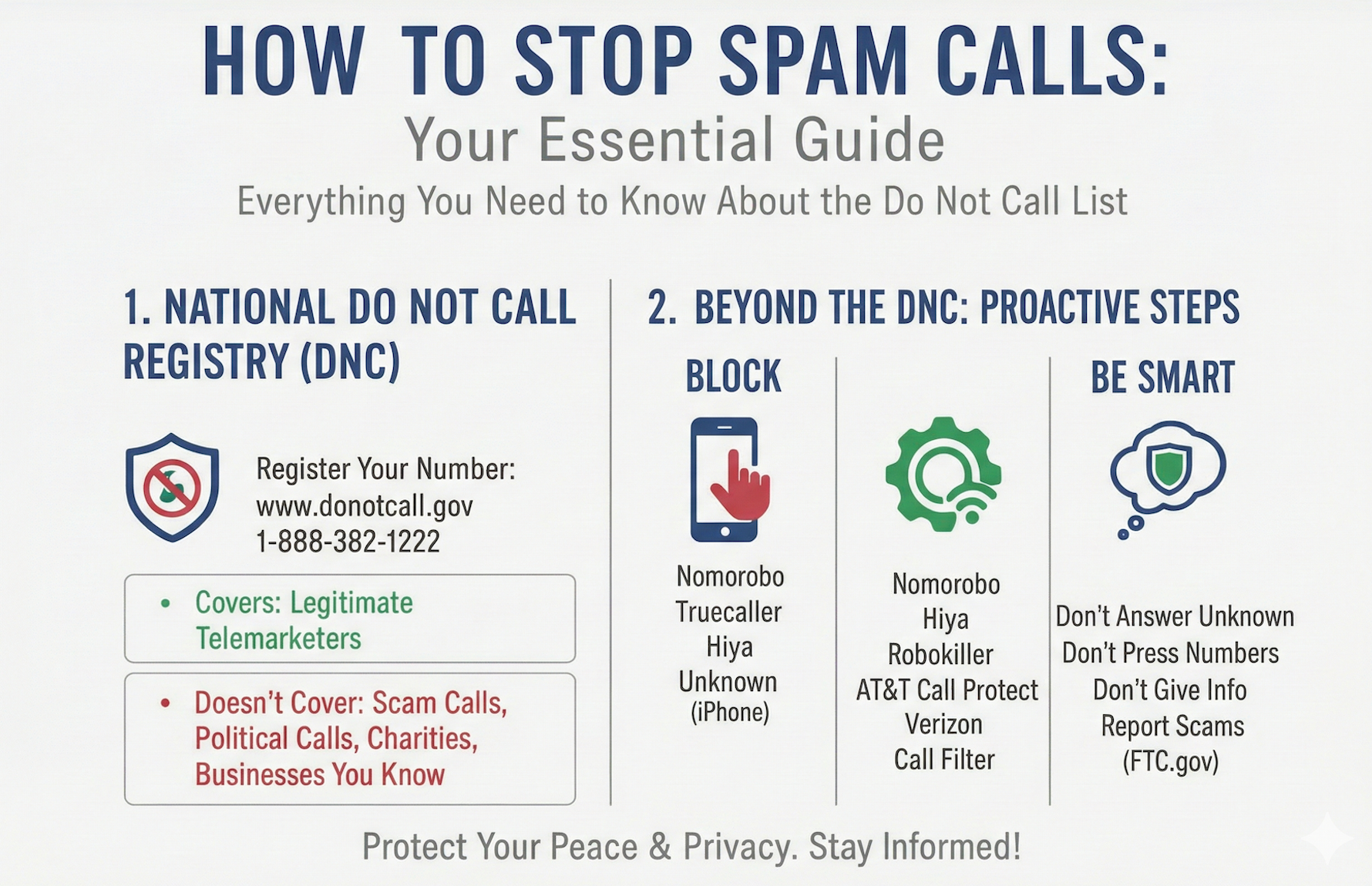
Spam calls are a persistent nuisance, but there are several strategies and tools you can use to reduce them significantly. The National Do Not Call Registry is a key component, but it’s not a silver bullet.
The National Do Not Call Registry
The National Do Not Call Registry is a free service managed by the Federal Trade Commission (FTC) that allows people in the United States to opt out of unsolicited telemarketing calls by registering their phone numbers online or by phone.
How to Register
• Go to www.donotcall.gov or call 1-888-382-1222 from the phone you want to register.
• All U.S. phone numbers—landlines and cell phones—can be registered, and each will remain on the list indefinitely unless you remove it or your number is disconnected.
• If you register online, you must verify your registration through a link sent to your email within 72 hours.
• Registration is free; you should never pay anyone offering to register for you, as this is commonly a scam.
How it Works
- Telemarketers covered by the Registry are required to stop calling registered numbers within 31 days.
- If you keep receiving unwanted sales calls 31 days after registration, you can file a complaint with the FTC through the website or by phone.
- The Registry does not block calls from political organizations, charities, surveyors, or companies with which you’ve done business or given written permission to call.
Business Compliance
- Telemarketers must check the Registry and remove listed numbers from their call lists. Violations can result in substantial penalties from the FTC.
- Businesses are forbidden from using the Registry for purposes other than preventing telemarketing calls.
The National Do Not Call Registry is a major tool for consumers to reduce intrusive telemarketing and robocalls, and all U.S. households are encouraged to register their numbers for greater privacy and peace of mind.


 2026-08-06