Why These Laws Exist
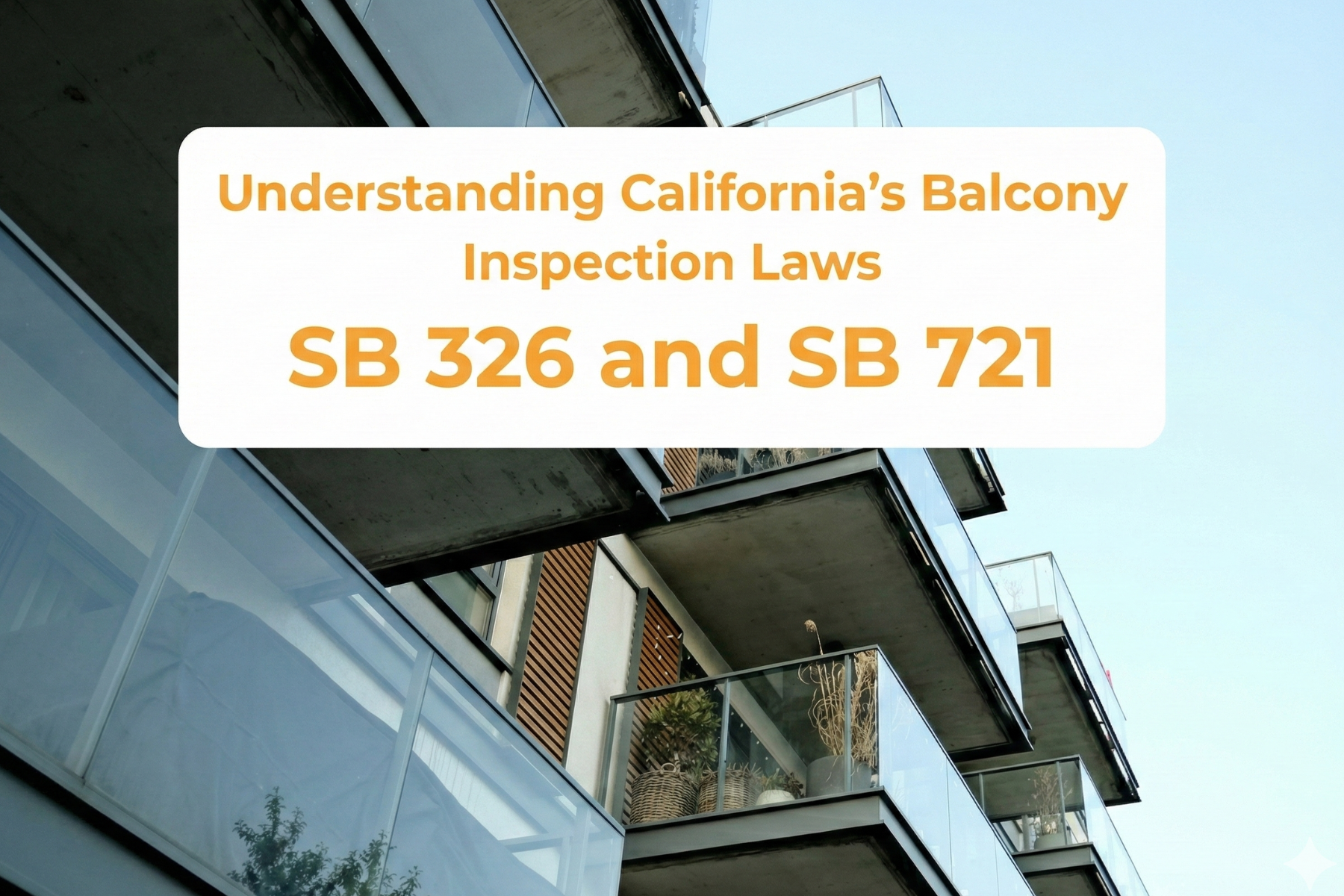
In 2015, a tragic balcony collapse in Berkeley claimed six lives and exposed serious gaps in the maintenance and inspection of wood-framed exterior structures. In response, California passed two laws — Senate Bill 326 (SB 326) and Senate Bill 721 (SB 721) — to prevent similar incidents and ensure the long-term safety of decks, balconies, and walkways in multifamily buildings.
Both laws focus on inspecting Exterior Elevated Elements (EEEs) — structures more than six feet above ground that rely on wood or wood-based materials for structural support.
Exterior Elevated Elements include:
- Balconies
- Decks
- Porches
- Stairways
- Walkways
- Railings
SB 326 applies to condominiums and other common interest developments governed by homeowners associations (HOAs). It requires that all elevated structures more than six feet above the ground, supported by wood or wood-based materials, undergo their first inspection by January 1, 2025, and every 9 years thereafter. The inspection must be conducted by a licensed structural engineer or architect, and the resulting report must be submitted to the HOA board and included in the association’s reserve study. This law ensures that associations proactively identify and address potential structural issues before they pose safety risks to residents.
SB 721 on the other hand, applies to multifamily rental buildings with three or more dwelling units. Property owners must also complete their first inspection by January 1, 2025, but subsequent inspections are required every 6 years. The inspection can be performed by a licensed architect, engineer, qualified building contractor, or certified building inspector. The report must be provided to the building owner and retained for at least two inspection cycles. If any unsafe conditions are found, repairs must be completed within a specified timeframe to maintain compliance and ensure tenant safety.


 2026-08-06