
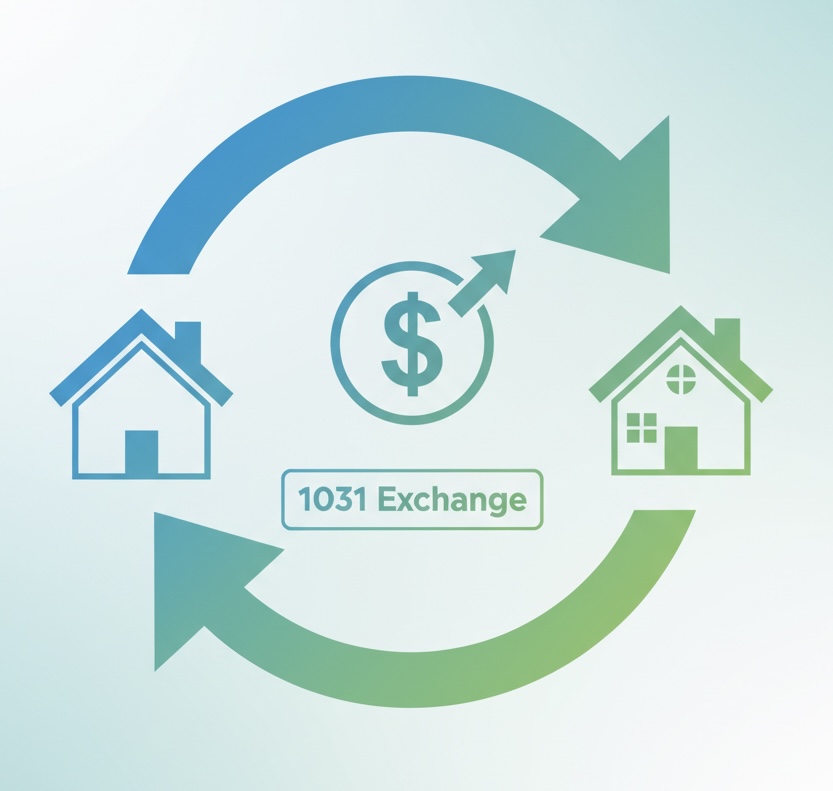
A 1031 Exchange is a tax-deferral strategy for real estate investors, allowing them to sell an investment property and reinvest the proceeds into another “like-kind” property—thereby deferring the capital gains taxes that would otherwise be owed after the sale. It is named after Section 1031 of the IRS code and is sometimes called a “like-kind exchange.”
What is a 1031 Exchange?
A 1031 Exchange, named after Section 1031 of the Internal Revenue Code, permits investors to sell a qualified investment or business property and defer paying capital gains taxes, provided the proceeds are used to purchase a similar (“like-kind”) property of equal or greater value. This tax strategy is intended to encourage ongoing investment and applies only to real estate held for productive use in business, trade, or investment—not personal residences or property held primarily for resale.
How it Works
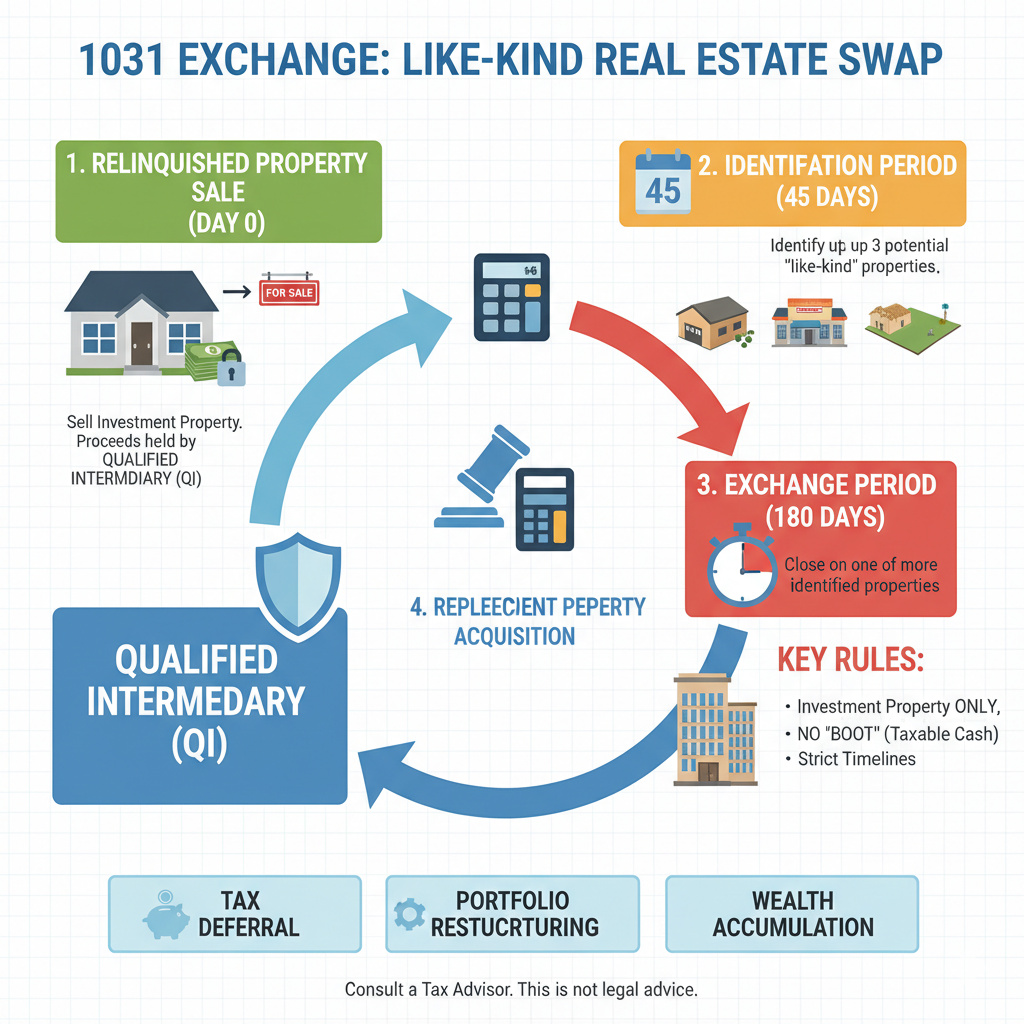
- Relinquished Property Sale: You sell an investment property (the “relinquished property”). The proceeds from this sale are held by a qualified intermediary (QI), not directly by you.
- Identification Period: Within 45 calendar days of selling the relinquished property, you must identify potential replacement properties. There are rules regarding how many properties you can identify:
- 3-Property Rule: Identify up to three properties of any value.
- 200% Rule: Identify any number of properties, as long as their aggregate fair market value does not exceed 200% of the fair market value of the relinquished property
- Exchange Period: Within 180 calendar days of selling the relinquished property (or the due date of your tax return for the year in which the relinquished property was sold, whichever is earlier), you must close on one or more of the identified replacement properties.
- Qualified Intermediary (QI): A QI is a crucial, independent third party who facilitates the exchange. They hold the sale proceeds from the relinquished property and use them to purchase the replacement property, ensuring you never have “constructive receipt” of the funds, which would trigger a taxable event.
Timeline Overview
Day o: Sale of the relinquished property closes; this starts the exchange clock.
Days 1–45: Identification Period. You must identify (in writing) up to three “like-kind” replacement properties you intend to acquire. If using the 200% rule, you may identify more, provided the total value doesn’t exceed 200% of the sold property.
Days 46–180: Exchange Period. You must purchase at least one of your identified properties and complete the transaction. The entire exchange must close within 180 calendar days of selling the relinquished property – no extensions unless under IRS disaster relief rules.
End of Exchange: Report the completed transaction to the IRS (Form 8824) and, for California, file Form FTB 3840 in the year of the exchange and annually until you pay tax on the deferred gain or meet an exception.
Types of Qualifying Properties
Virtually any business or investment real estate can qualify, including: Single-family homes, multifamily apartment buildings, commercial buildings, retail centers, industrial warehouses, farmland, leaseholds over 30 years, and more.
Key Benefits
• Tax Deferral: The primary benefit is the deferral of capital gains taxes. This allows you to reinvest the full value of your investment, potentially accelerating wealth accumulation.
• Estate Planning: Capital gains can be deferred indefinitely through successive exchanges, and upon your death, your heirs receive a “stepped-up basis,” potentially eliminating the deferred capital gains tax altogether.
• Portfolio Restructuring: It allows investors to shift investments, for example, from one type of real estate to another (e.g., from a residential rental to a commercial property), or to consolidate multiple properties into one, or vice-versa.
• Location Changes: You can exchange properties in one geographical area for properties in another.
Conclusion
In conclusion, a 1031 Exchange is a powerful tax-deferral strategy that allows California real estate investors to preserve and grow their equity, but its success relies on precise timing, proper structuring, and strict compliance with IRS and California regulations. Working closely with a qualified intermediary, tax advisor, and real estate professional ensures that investors maximize the benefits while minimizing potential risks or costly mistakes.


