How to Stop Spam Calls/ Everything You Need to Know About the Do Not Call List

Spam calls are a persistent nuisance, but there are several strategies and tools you can use to reduce them significantly. The National Do Not Call Registry is a key component, but it’s not a silver bullet.

The National Do Not Call Registry

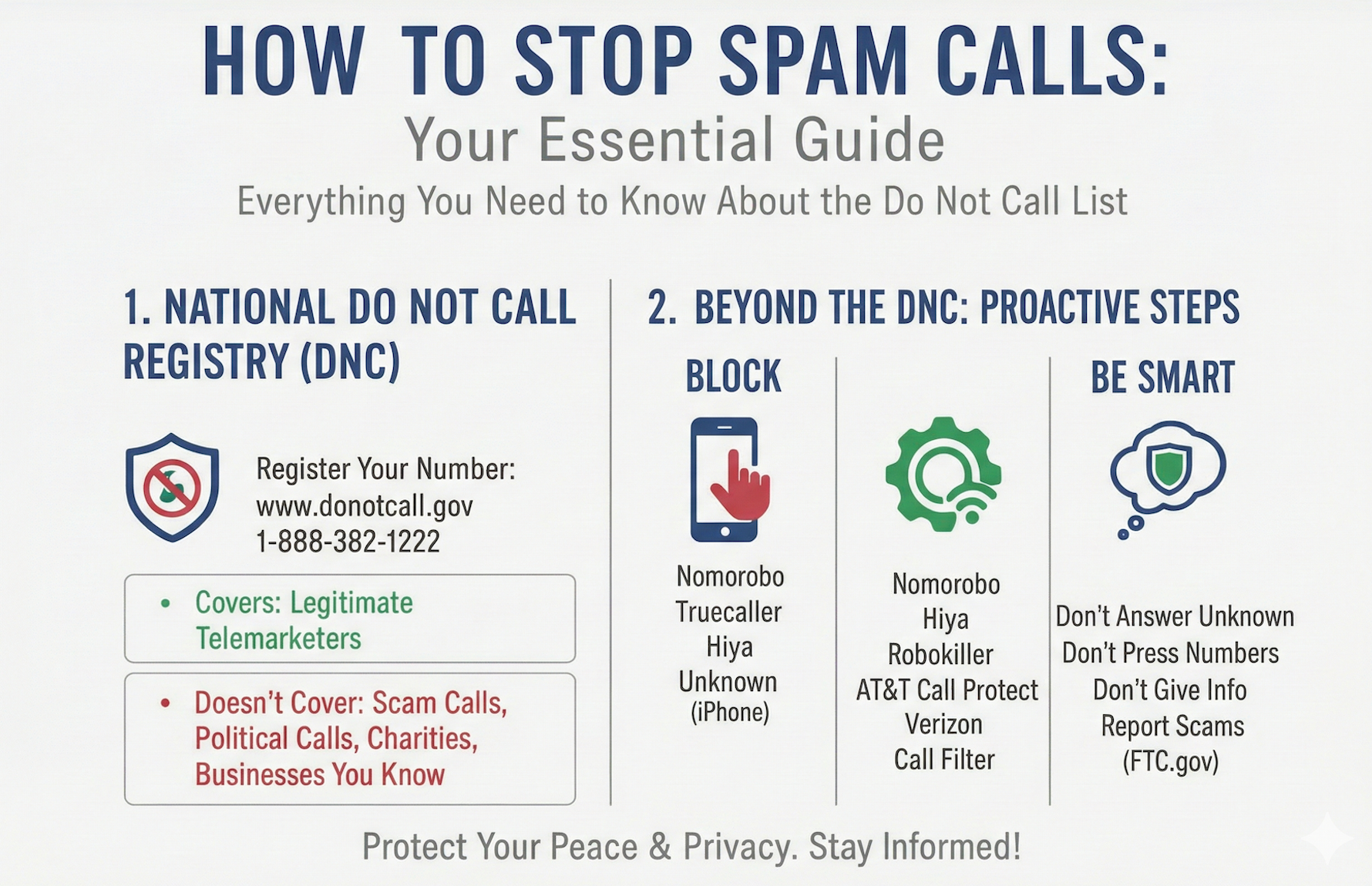
The National Do Not Call Registry is a free service managed by the Federal Trade Commission (FTC) that allows people in the United States to opt out of unsolicited telemarketing calls by registering their phone numbers online or by phone.

How to Register

• Go to www.donotcall.gov or call 1-888-382-1222 from the phone you want to register.
• All U.S. phone numbers—landlines and cell phones—can be registered, and each will remain on the list indefinitely unless you remove it or your number is disconnected.
• If you register online, you must verify your registration through a link sent to your email within 72 hours.
• Registration is free; you should never pay anyone offering to register for you, as this is commonly a scam.

How it Works

  • Telemarketers covered by the Registry are required to stop calling registered numbers within 31 days.
  • If you keep receiving unwanted sales calls 31 days after registration, you can file a complaint with the FTC through the website or by phone.
  • The Registry does not block calls from political organizations, charities, surveyors, or companies with which you’ve done business or given written permission to call.

Business Compliance

  • Telemarketers must check the Registry and remove listed numbers from their call lists. Violations can result in substantial penalties from the FTC.
  • Businesses are forbidden from using the Registry for purposes other than preventing telemarketing calls.

The National Do Not Call Registry is a major tool for consumers to reduce intrusive telemarketing and robocalls, and all U.S. households are encouraged to register their numbers for greater privacy and peace of mind.


What FIRPTA Means for Foreign Sellers in California Real Estate

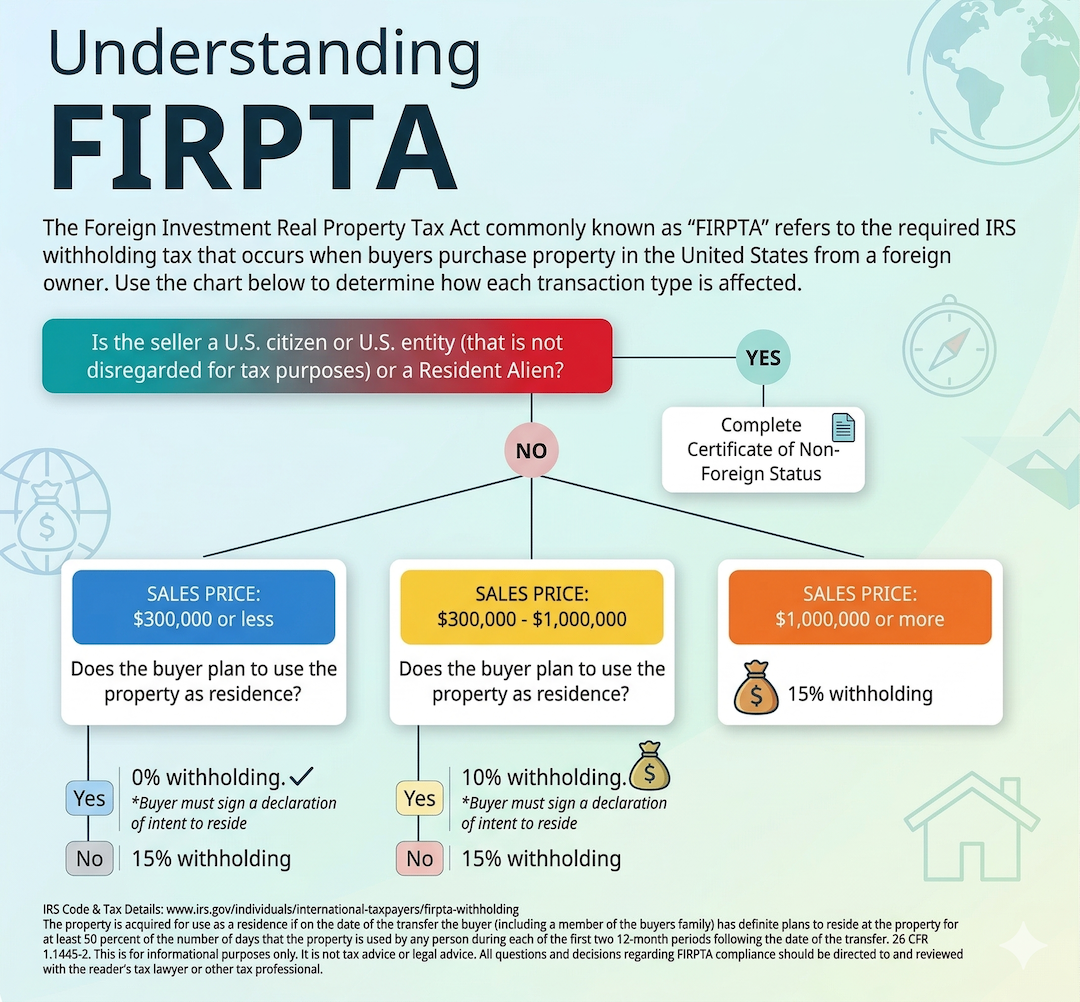
The Foreign Investment in Real Property Tax Act (FIRPTA), enacted in 1980, is a U.S. tax law that requires foreign individuals and entities selling U.S. real estate to pay federal income tax on any gain from the sale. Under this law, when a foreign seller transfers ownership of a property in the United States, the buyer must withhold 15% of the total sales price and send it to the IRS at closing. This withholding ensures the federal government can collect applicable taxes that might otherwise go unpaid if the seller departs the country after the transaction.

FIRPTA Withholding Rules for Buyers and Sellers

FIRPTA creates distinct withholding obligations for buyers and sellers when a foreign person sells U.S. real estate. Here’s how the rules work for each party:

Buyers’ FIRPTA Responsibilities

Must determine the seller’s citizenship status. If the seller is a foreign person, the buyer (not the seller) is responsible for withholding.

  • Typically withholds 15% of the total sales price at closing and remits it to the IRS within 20 days using IRS Forms 8288 and 8288-A.
  • The amount realized includes: cash paid, fair market value of any non-cash property, or loans/assumed liabilities as part of the sale.
  • Can rely on a properly completed “non-foreign affidavit” from the seller to avoid withholding.
  • Exemptions and reduced rates:
    ◦ No withholding if the sale price is $300,000 or less and the buyer intends to use the property as a residence.
    ◦ Withholding is reduced to 10% if the sale price is $1 million or less and the buyer will reside in the property.
    ◦ May escrow the withheld amount if the seller applies for a withholding certificate (Form 8288-B) from the IRS for a lower or exempt amount.

Sellers’ FIRPTA Responsibilities

  • Foreign sellers are subject to the 15% withholding, which is credited against any tax due on the U.S. gain when filing their U.S. tax return.
  • May provide a non-foreign affidavit (if applicable) to prove U.S. citizenship or residency and avoid withholding.
  • Can apply to the IRS for a withholding certificate to reduce or eliminate the withheld amount if the actual tax owed will be less than the default withholding.

What Both Parties Should Know

  • Failure to comply can result in the buyer being liable for the full tax due, interest, and penalties.
  • The obligation exists regardless of whether the property is sold at a gain or loss.
  • Both buyers and sellers should consult tax professionals for complex situations or when seeking exemptions or reduced rates.

FIRPTA places the full burden of compliance on the buyer to ensure IRS withholding is conducted accurately and on time.

NAR Settlement and Real Estate Commission Changes Explained

The NAR (National Association of REALTORS®) and BRBC (Buyer Representation and Broker Compensation) settlement marks a major shift in how real estate commissions are structured and disclosed in the U.S. housing market. This change particularly impacts the way buyers and sellers negotiate agent compensation, transparency, and the roles of each party in the transaction.

Background and What Led to the Settlement

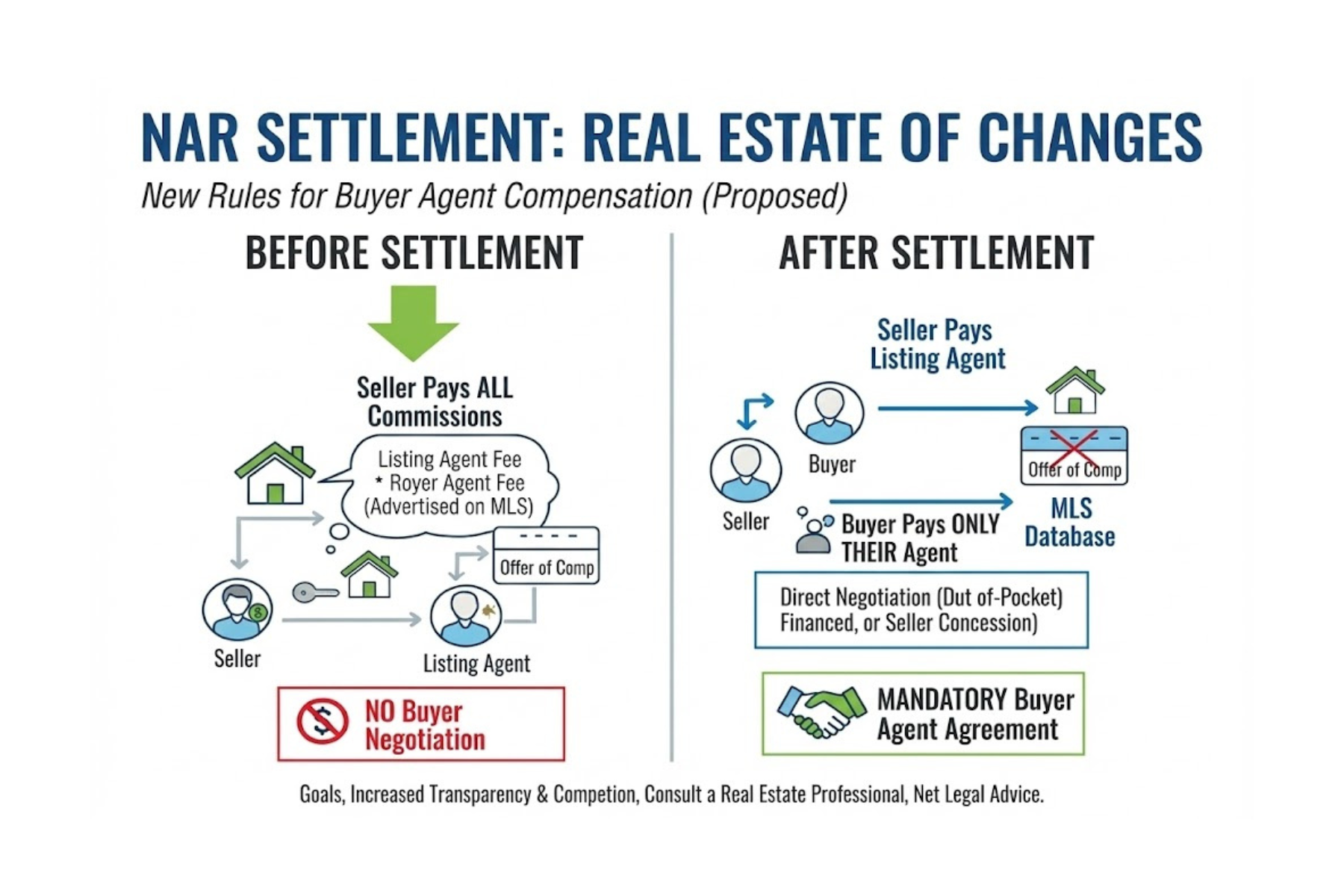
A series of lawsuits alleged that NAR and several large brokerages conspired to inflate real estate commissions by requiring sellers to pay both the listing and buyer’s agent commissions—a practice that plaintiffs argued limited competition and
increased costs for consumers. In response, a federal jury found NAR liable, resulting in a $418 million settlement and sweeping changes to industry practices, which took effect in August 2024.

The Key Changes

  • No more mandatory seller-paid buyer’s agent commissions: Sellers are no longer required to pay the buyer’s agent’s commission and listing agents can’t advertise buyer broker compensation in the MLS.
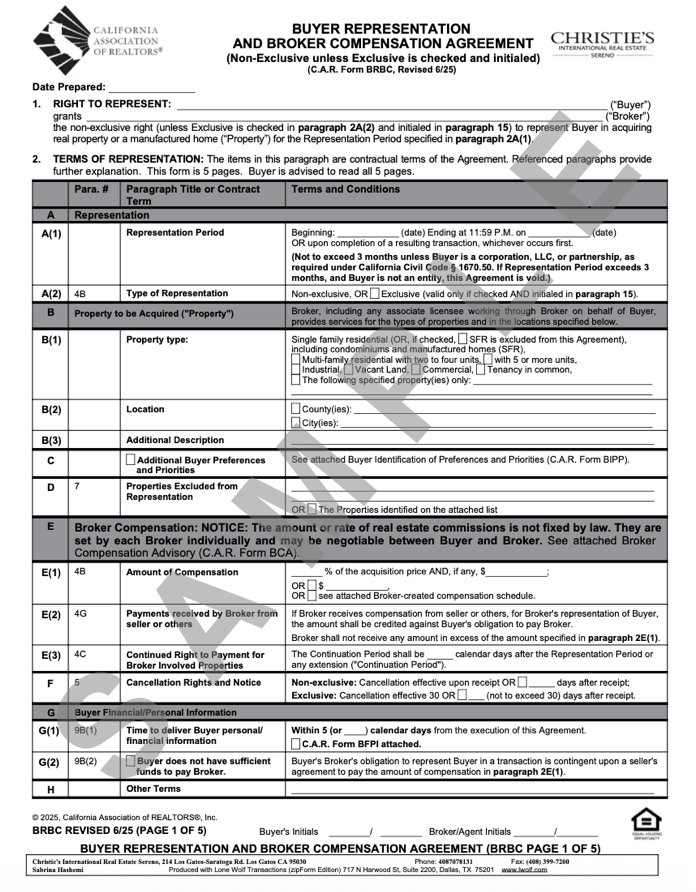
  • Buyers must have a written agreement (BRBC) with their agent: Buyers and agents must negotiate and sign a Buyer Representation and Broker Compensation agreement, specifying how much the agent will be paid and for what services—before the agent can show homes.
  • Commission amounts are negotiable: The agreement must include a conspicuous statement that the buyer’s broker fee is fully negotiable and not set by law.
  • Direct negotiation and payment: Buyers may pay their broker directly, or a seller may still choose to offer compensation, but it must be negotiated and made explicit in agreements—not assumed or published in MLS listings.
  • Increased transparency: All parties receive clear disclosures about compensation, amount, and services provided.

What It Means for Buyers and Sellers

  • Buyers now know up-front what working with their agent will cost and can negotiate terms and amounts, increasing their flexibility.
  • Sellers have more control—they can still offer to help pay buyer agent fees, but it’s no longer automatic or required.
  • There is new pressure for agents to demonstrate value and for commissions to be more competitively priced, potentially reducing buyer and seller costs over time.

Final Takeaway

The BRBC and NAR settlement gives consumers new tools, flexibility, and information in real estate transactions. Whether you’re buying or selling, these rules mean more negotiating power, greater transparency, and the ability to decide how—and how much—agents are paid in the transaction.

Reset password

Enter your email address and we will send you a link to change your password.

Get started with your account

to save your favourite homes and more

Sign up with email

Get started with your account

to save your favourite homes and more

By clicking the «SIGN UP» button you agree to the Terms of Use and Privacy Policy
Powered by Estatik